![[C]Worthy](http://images.squarespace-cdn.com/content/v1/66b3f00a872f892fc1c3299b/02f683d5-3e94-4cc3-90e5-cc909ba570a6/01-CWorthy-Wordmark-Red-RGB.png?format=1500w)
LEARN
Research
Explore [C]Worthy’s research advancing the understanding, evaluation, and responsible deployment of ocean-based carbon dioxide removal.
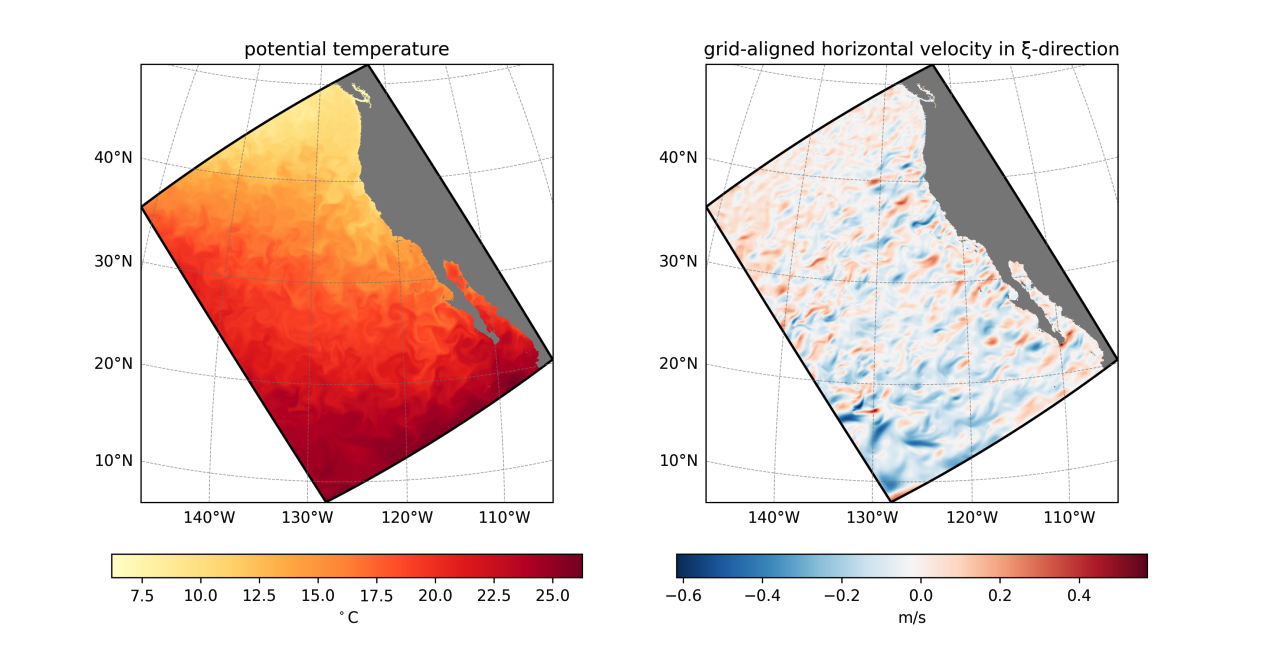
ROMS-Tools: Reproducible Preprocessing and Analysis for Regional Ocean Modeling with ROMS
This paper introduces ROMS-Tools, an open-source Python package that streamlines the setup, preprocessing, and analysis of regional ocean model (ROMS-MARBL) simulations by automating grid generation, forcing-file creation, and output analysis. Adopted by researchers across ocean modeling and marine carbon dioxide removal communities, including [C]Worthy, Carbon to Sea, and Ebb Carbon, ROMS-Tools lowers technical barriers and improves the reproducibility of regional ocean modeling workflows.
Loose, N., Nicholas, T., Maticka, S., Eilerman, S., McBride, C., Stephenson, D., Heede, U., Saenz, B., Thyng, K. M., Bachman, S., Damien, P., Karspeck, A., Long, M. C., Molemaker, M. J., and Wyatt, A.
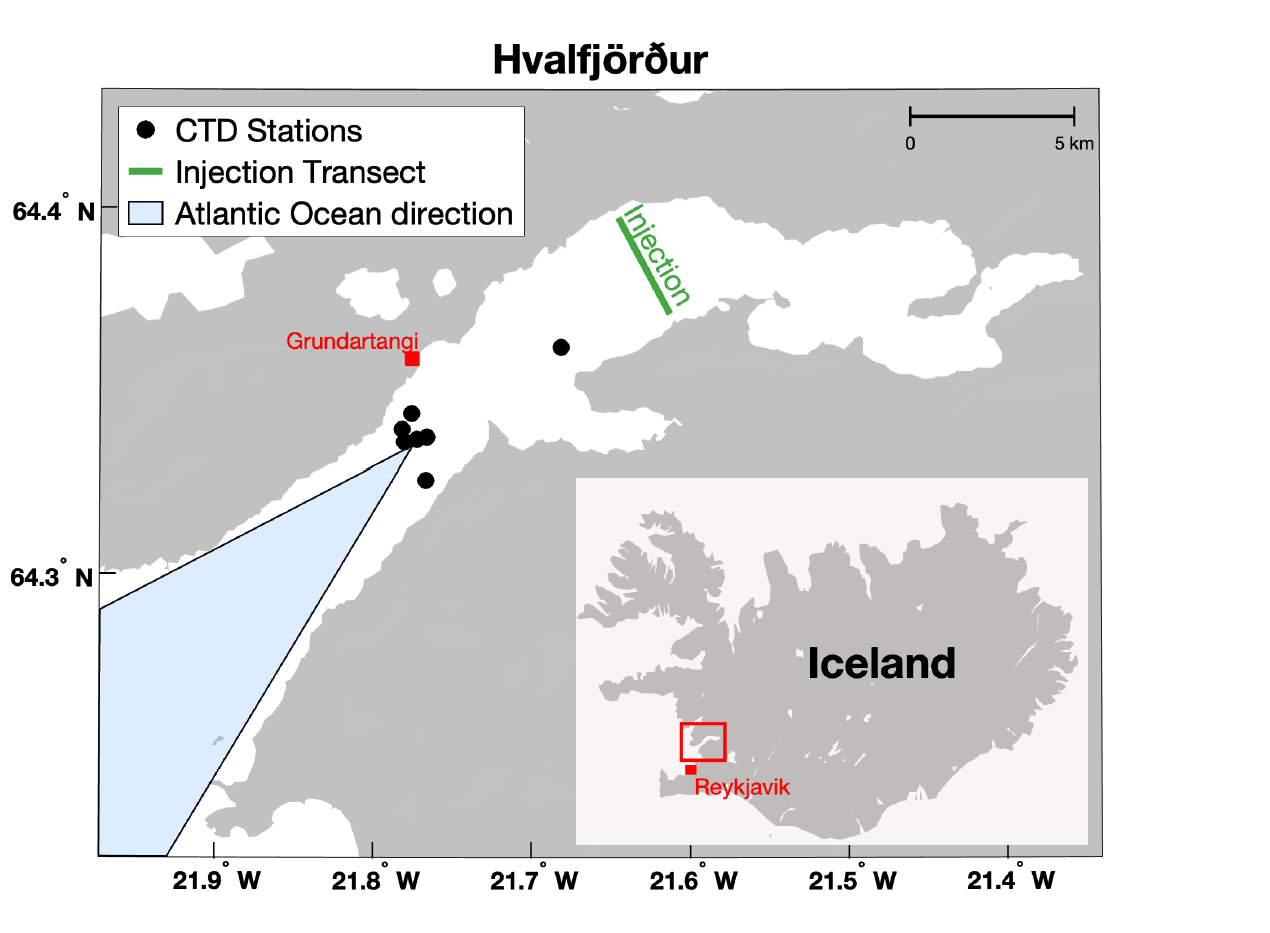
Limits on marine carbon dioxide removal potential set by coastal air-sea gas exchange rates
Using a helium-3/sulfur hexafluoride dual-tracer release in Hvalfjörður, Iceland, this study shows that gas transfer velocities within a fjord are lower than open-ocean rates at comparable wind speeds, but that the fjord's short, four-day water residence time limits the practical impact of this difference on overall CO2 uptake in this location. The results caution that in coastal settings with longer residence times or faster subduction of surface water, assuming open-ocean gas exchange rates could substantially overestimate the carbon dioxide removal potential of marine CDR projects.
Gerke, L., Ho, D. T., Heede, U. K., and Koffman, T.
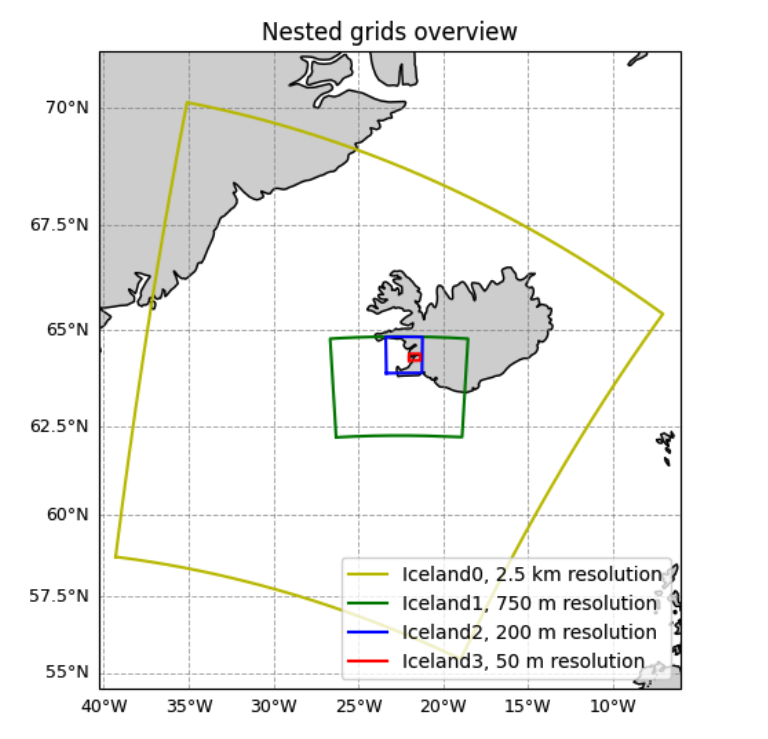
Simulating enhanced ocean alkalinity experiments in a high-latitude fjord using nested ROMS simulations coupled with MARBL biogeochemistry
This study uses a nested, high-resolution ROMS-MARBL ocean model (C-Star) to simulate ocean alkalinity enhancement releases in Hvalfjörður, an Icelandic fjord, and validates the model against a 2024 field campaign that included a dual-tracer release experiment. The model captures the fjord's circulation, tracer dispersal, and seasonal stratification well, and the simulated OAE releases show that wind and tidal conditions are the primary controls on signal detectability and CO2 uptake efficiency, supporting the use of C-Star for planning future OAE field trials in fjord and estuary settings.
Heede, U. K., Long, M. C., Karspeck, A., Bachman, S., Loose, N., Stephenson, D., Ho, D. T., Gerke, L., Koffman, T., Benoit-Cattin, A., Harðardóttir, S., and Macrander, A.
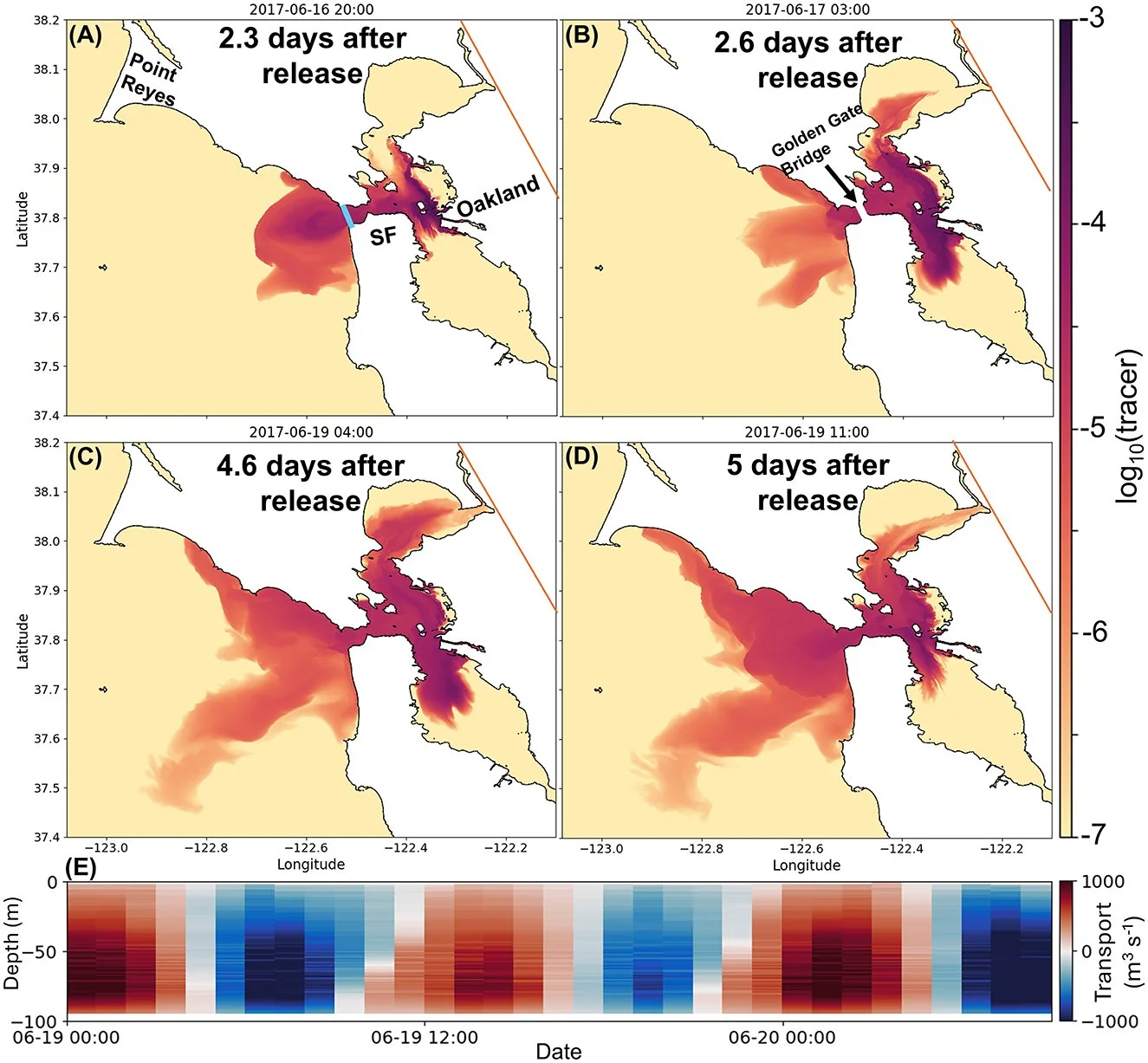
Ocean alkalinity enhancement in an estuary
This study uses a high-resolution ocean model and a new tracer-based method to simulate ocean alkalinity enhancement in San Francisco Bay, showing that estuarine dynamics rapidly transport added alkalinity to the ocean surface where it enhances CO₂ uptake. The results suggest estuaries may enable faster air–sea CO₂ equilibration than open-ocean settings, while highlighting the need for further study of ecological impacts.
Ho, M., Molemaker, J., Damien, P., Long, M. C., Bianchi, D., and McWilliams, J. C.
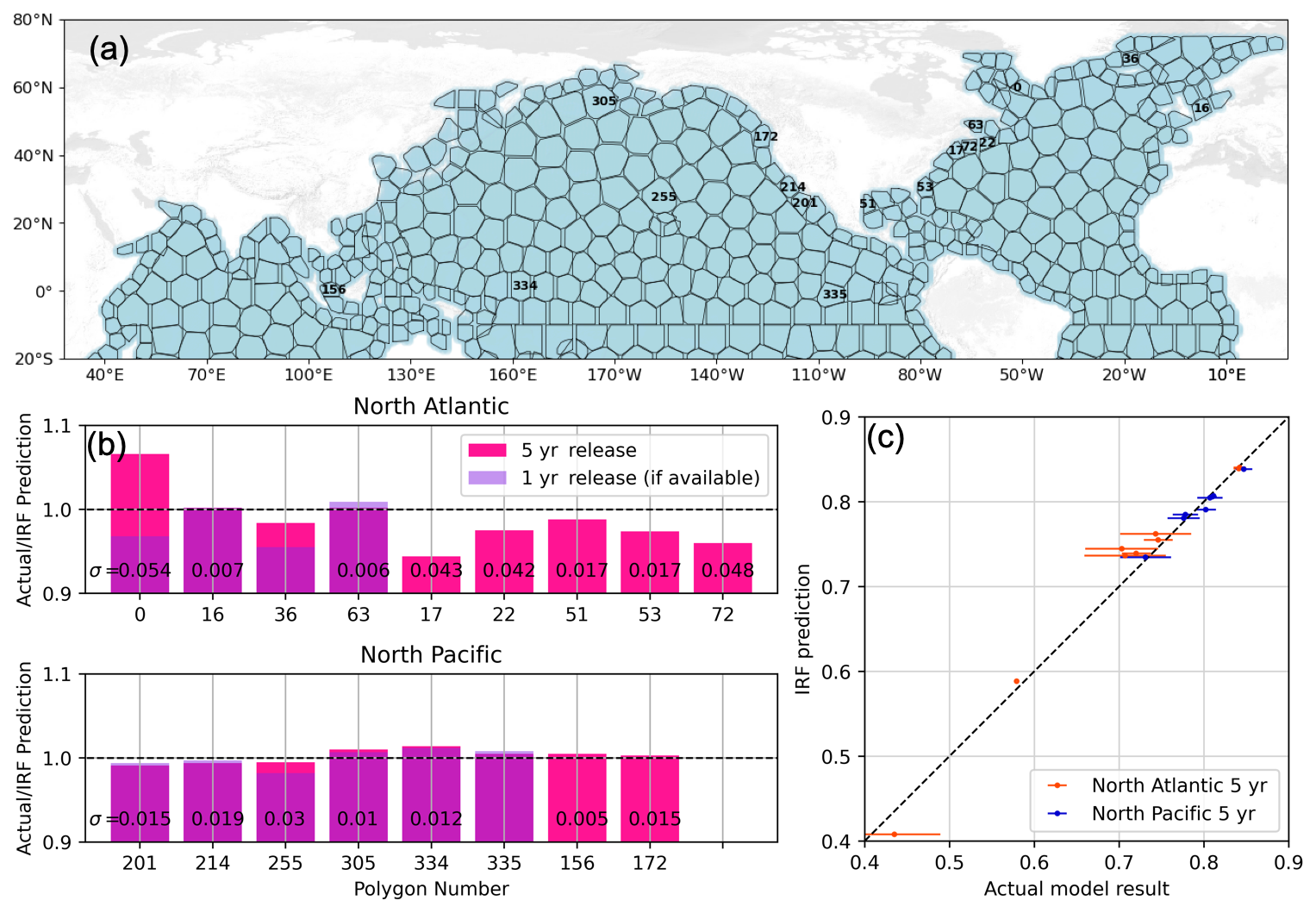
Impulse response functions as a framework for quantifying ocean-based carbon dioxide removal
This paper introduces an impulse response function (IRF) approach to quantify carbon uptake from ocean alkalinity enhancement, enabling prediction of CO₂ removal over time from short-duration model simulations. Results from global ocean model tests show the method can estimate carbon uptake with only a few percent error, supporting its potential use in robust monitoring, reporting, and verification (MRV) and carbon accounting frameworks for ocean-based carbon dioxide removal (CDR).
Yankovsky, E., Zhou, M., Tyka, M., Bachman, S., Ho, D. T., Karspeck, A., and Long, M. C.
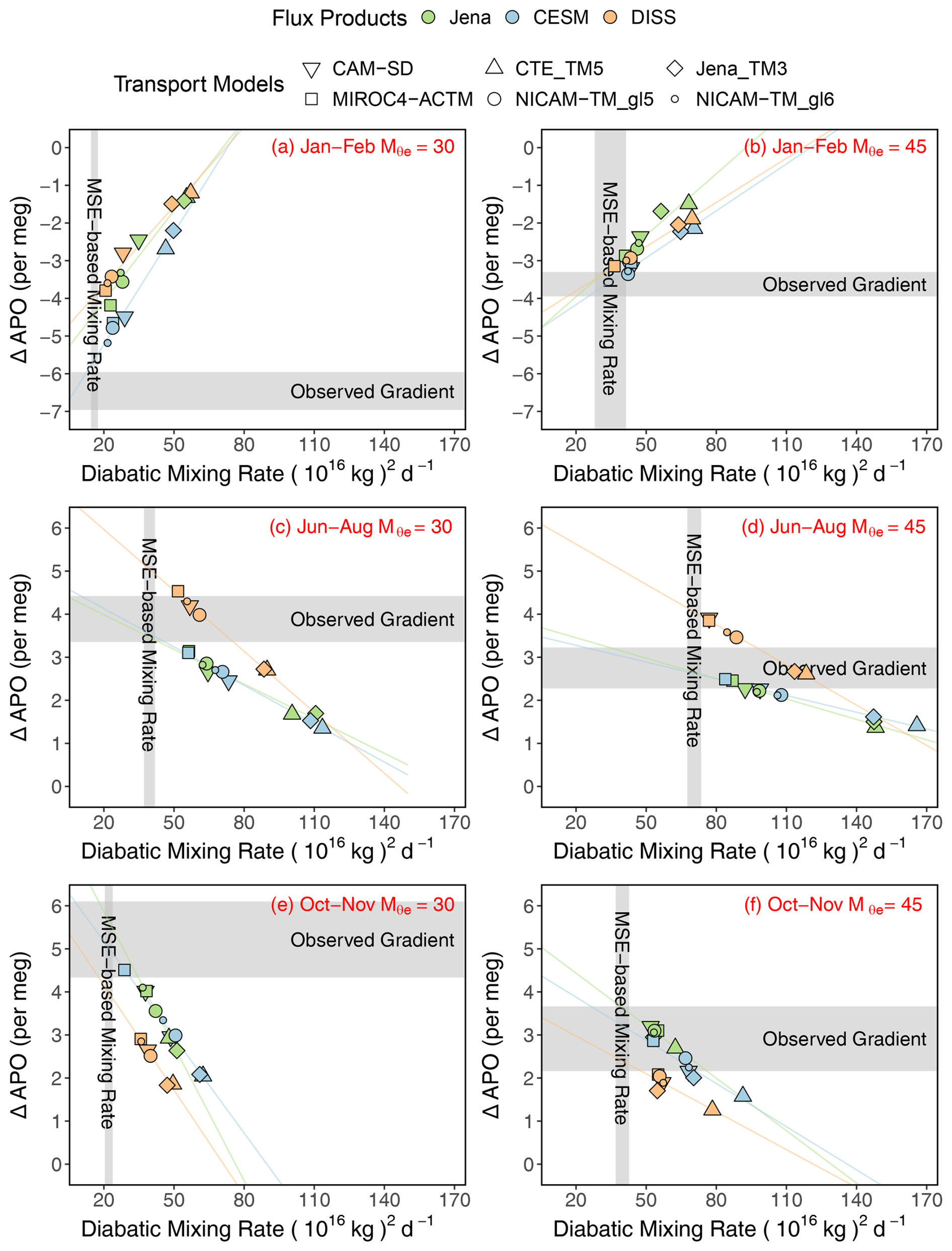
The Atmospheric Potential Oxygen forward Model Intercomparison Project (APO-MIP1): evaluating simulated atmospheric transport of air-sea gas exchange tracers and APO flux products
This study presents results from APO-MIP1, the first model intercomparison project to evaluate how well atmospheric transport models simulate Atmospheric Potential Oxygen (APO) by comparing them against surface, airborne, and shipboard observations. The findings reveal systematic transport biases and provide new benchmarks and datasets to improve APO flux estimates and understanding of ocean biogeochemical processes.
Jin, Y., Stephens, B. B., Long, M. C., Chandra, N., Chevallier, F., Hooghiem, J. J. D., Luijkx, I. T., Maksyutov, S., Morgan, E. J., Niwa, Y., Patra, P. K., Rödenbeck, C., and Vance, J.
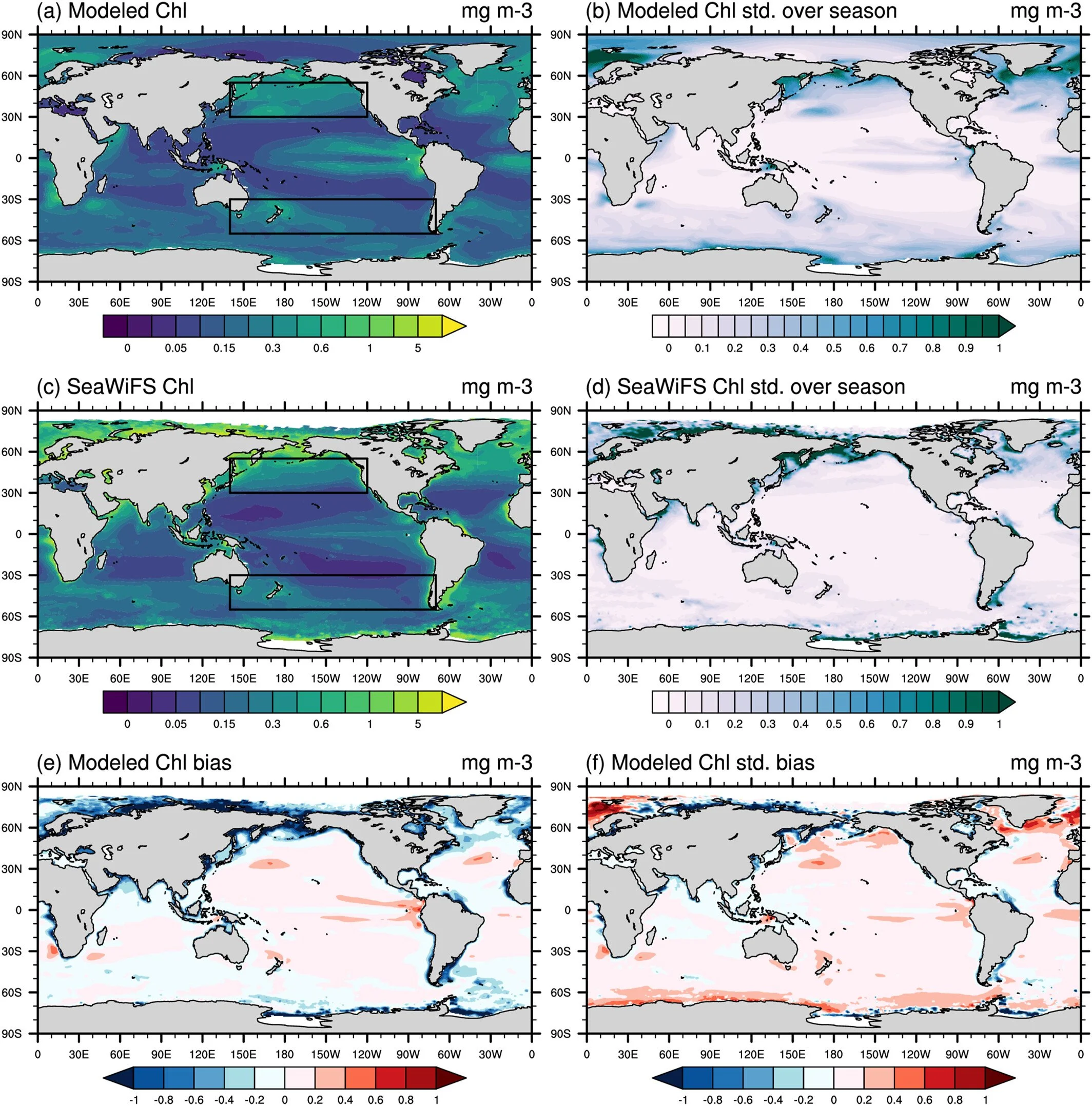
Simulating Marine Ecosystem Dynamics and Biogeochemical Cycling With Multiple Plankton Functional Types
This study introduces MARBL-8P4Z, an expanded marine ecosystem model in CESM that represents a more realistic plankton food web with multiple phytoplankton groups and zooplankton size classes. The model reproduces observed global patterns in plankton biomass, community structure, and biogeochemistry, improving our ability to capture ecosystem–biogeochemistry interactions and assess climate-driven changes in the ocean.
Yu, J., Krumhardt, K. M., Keith Moore, J., Letscher, R. T., Wang, S., Wiseman, N. A., Long, M. C., Lindsay, K., Levy, M., Petrik, C. M., and Martiny, A. C.
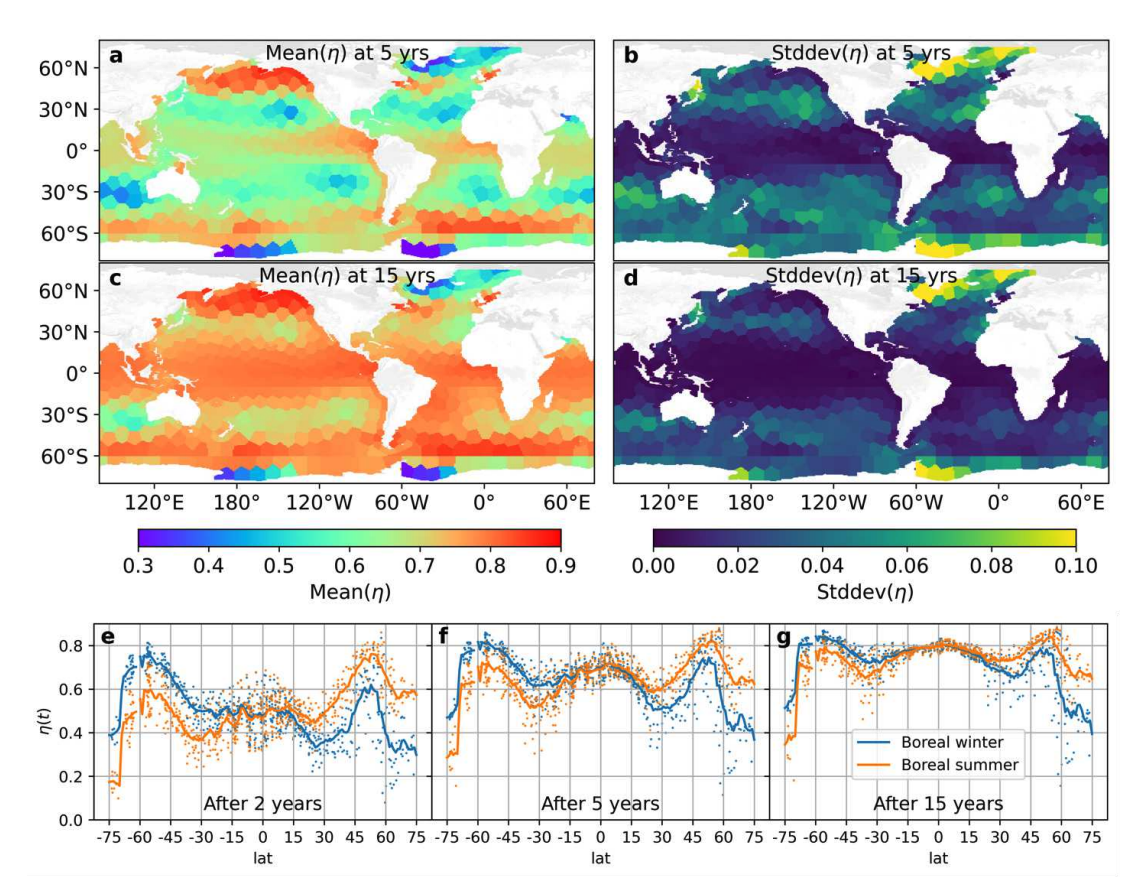
Mapping the global variation in the efficiency of ocean alkalinity enhancement for carbon dioxide removal
This study presents global maps of ocean alkalinity enhancement efficiency, showing how air–sea CO₂ equilibration varies by location and season. The results identify distinct fast and slow equilibration phases and highlight where and when OAE deployments may be most effective, with implications for both siting decisions and regional modeling needs.
Zhou, M., Tyka, M. D., Ho, D. T., Yankovsky, E., Bachman, S., Nicholas, T., Karspeck, A. R., and Long, M. C.
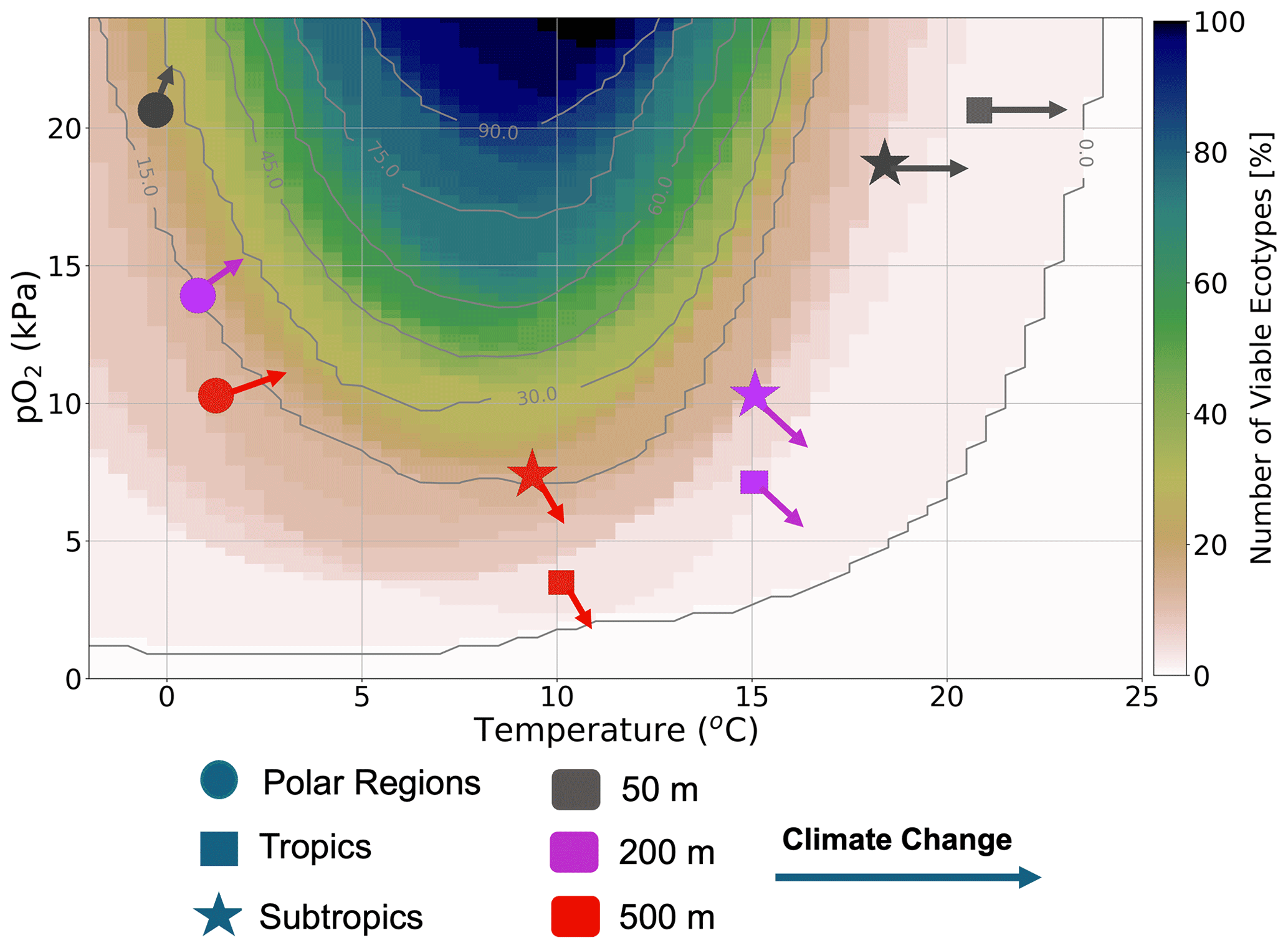
Climatic controls on metabolic constraints in the ocean
This study combines physiological trait data with large-ensemble climate model simulations to assess how ocean warming and deoxygenation jointly constrain viable habitats for marine life. The results show that human-driven changes in temperature and oxygen are emerging faster than natural variability and will substantially reduce aerobic habitat volume, pushing many organisms closer to their physiological limits.
Mongwe, P., Long, M., Ito, T., Deutsch, C., and Santana-Falcón, Y.
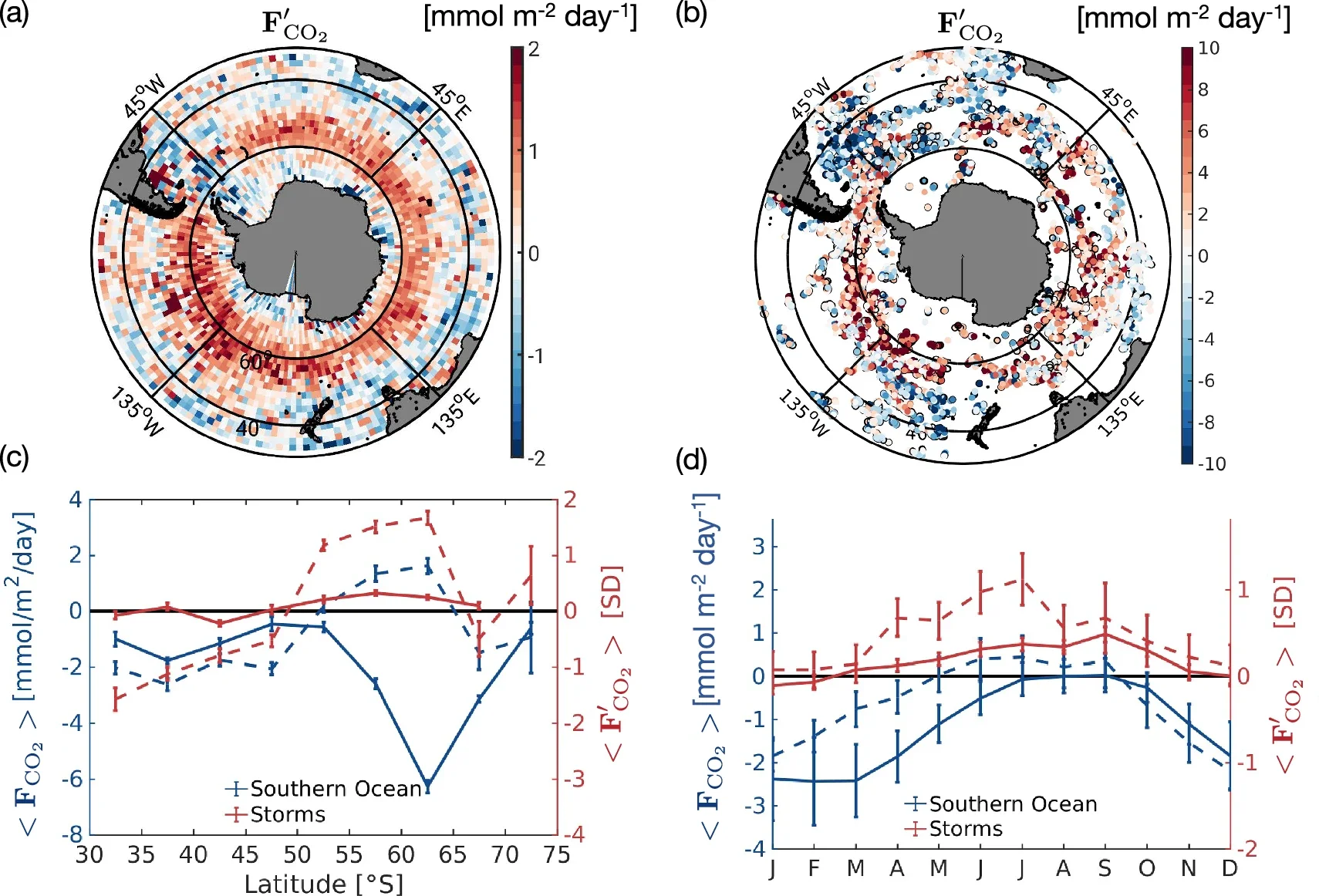
Extratropical storms induce carbon outgassing over the Southern Ocean
This study investigates how Southern Ocean storms influence air–sea CO₂ exchange, finding that extratropical storms tend to drive CO₂ outgassing through enhanced disequilibrium. Comparisons between models and observations reveal large discrepancies, suggesting storms play a larger role in the Southern Ocean carbon sink than is currently captured by climate models.
Carranza, M. M., Long, M. C., Di Luca, A., Fassbender, A. J., Johnson, K. S., Takeshita, Y., Mongwe, P., and Turner, K. E.
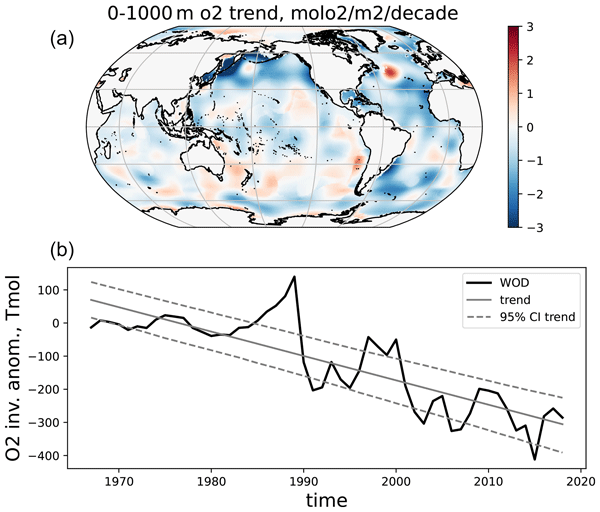
Underestimation of multi-decadal global O2 loss due to an optimal interpolation method
This study uses CMIP6 Earth system models to assess how sparse ocean observations bias estimates of long-term oxygen decline. The results show that common gap-filling methods likely underestimate global deoxygenation highlighting the need for improved approaches to quantify oxygen trends and their uncertainties.
Ito, T., Garcia, H. E., Wang, Z., Minobe, S., Long, M. C., Cebrian, J., Reagan, J., Boyer, T., Paver, C., Bouchard, C., Takano, Y., Bushinsky, S., Cervania, A., and Deutsch, C. A.
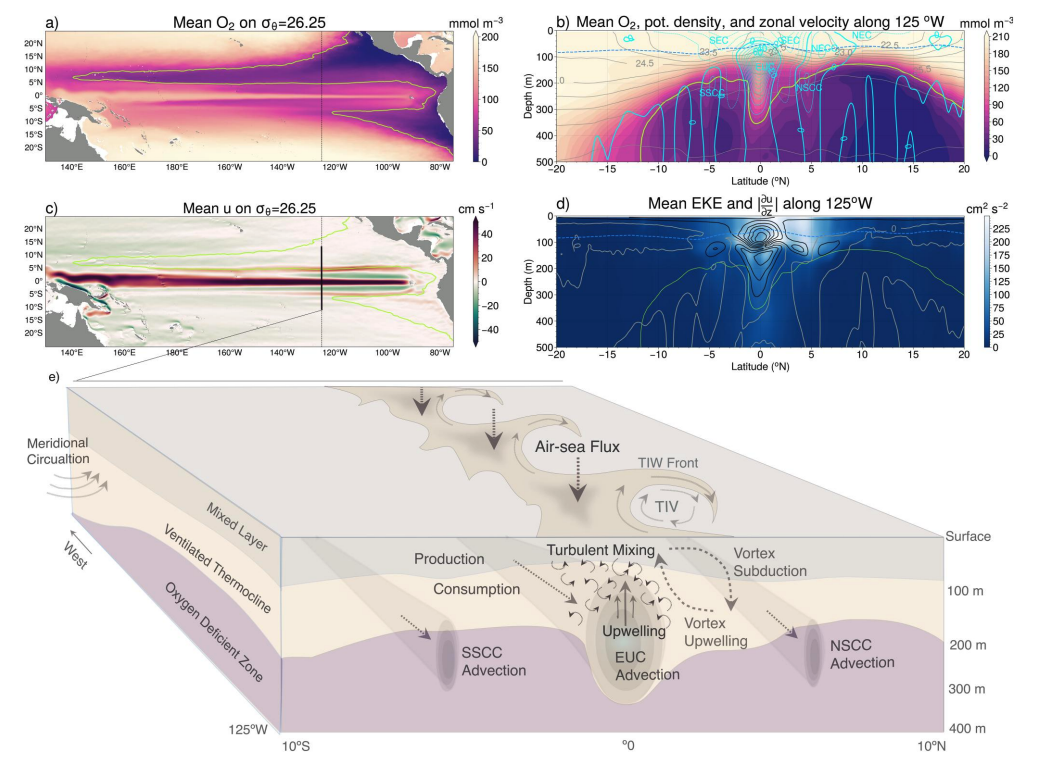
Eddy‐Mediated Turbulent Mixing of Oxygen in the Equatorial Pacific
This study uses an eddy-resolving ocean biogeochemical model to show that vertical mixing plays a major role in supplying oxygen to the tropical Pacific thermocline. The results highlight vertical mixing as a critical, seasonally varying oxygen pathway that complements large-scale circulation and must be represented to accurately predict future oxygen changes.
Eddebbar, Y. A., Whitt, D. B., Verdy, A., Mazloff, M. R., Subramanian, A. C., and Long, M. C.
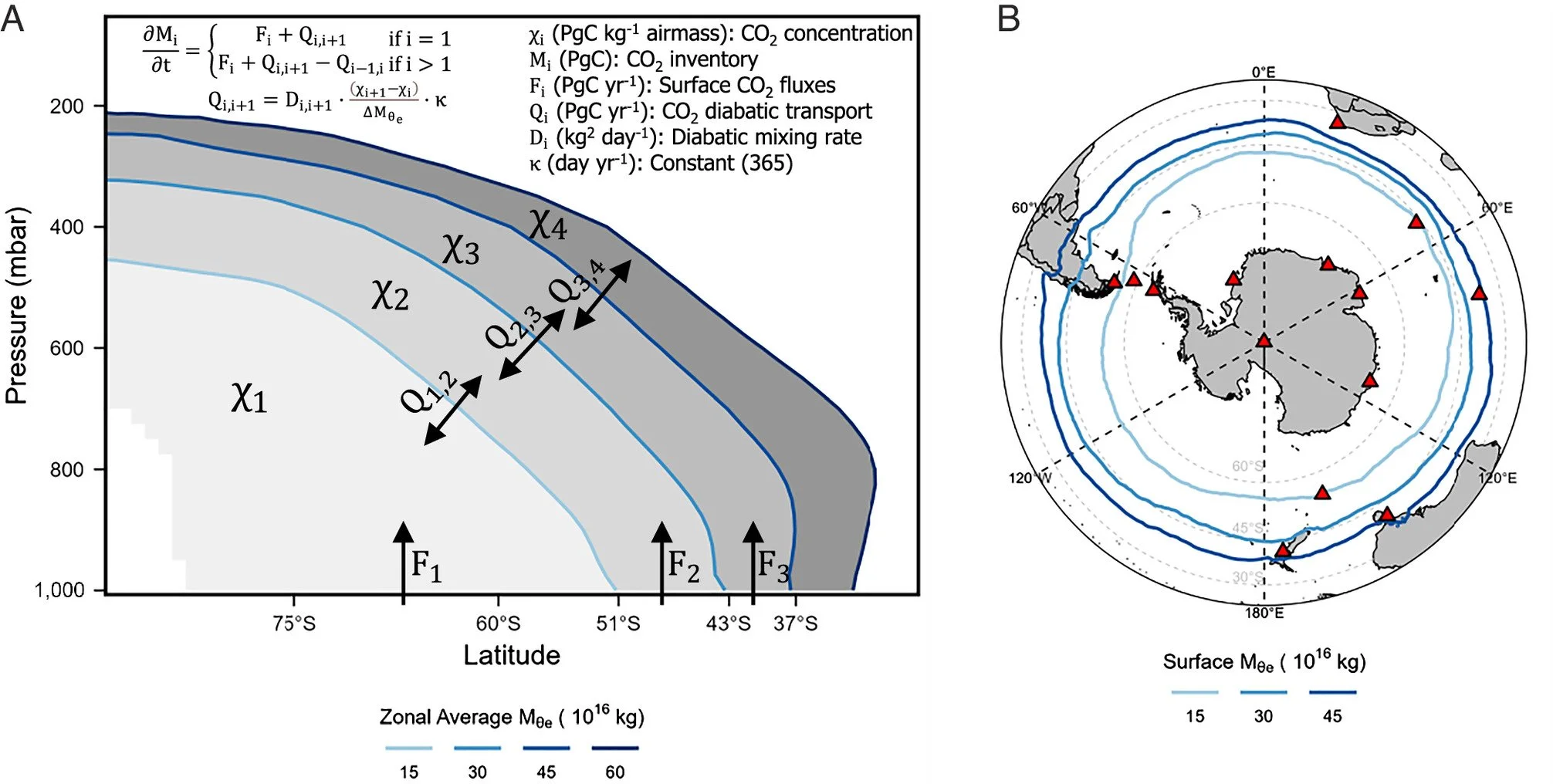
Improved atmospheric constraints on Southern Ocean CO2 exchange
This study uses airborne CO₂ measurements and an isentropic inverse modeling approach to produce improved estimates of Southern Ocean air–sea CO₂ exchange, revealing previously unresolved seasonal features across latitude bands. The results also identify systematic biases in atmospheric transport models, highlighting the importance of constraining atmospheric mixing to better quantify the Southern Ocean carbon sink.
Jin, Y., Keeling, R. F., Stephens, B. B., Long, M. C., Patra, P. K., Rödenbeck, C., Morgan, E. J., Kort, E. A., and Sweeney, C.

Monitoring, reporting, and verification for ocean alkalinity enhancement
Early-stage MRV for ocean alkalinity enhancement must prioritize transparency, reproducibility, and comprehensive measurement to underpin future carbon dioxide removal (CDR) markets. While field observations can track alkalinity delivery and local chemical and ecological responses, robust verification of carbon removal will ultimately require validated numerical models.
Ho, D. T., Bopp, L., Palter, J. B., Long, M. C., Boyd, P. W., Neukermans, G., and Bach, L. T.