![[C]Worthy](http://images.squarespace-cdn.com/content/v1/66b3f00a872f892fc1c3299b/02f683d5-3e94-4cc3-90e5-cc909ba570a6/01-CWorthy-Wordmark-Red-RGB.png?format=1500w)
LEARN
A collection of announcements and media coverage that feature our work: both updates we’ve shared and places our efforts have been highlighted in the broader climate and science community.
News
Rainfall Makes the Ocean a Greater Carbon Sink
“It may be surprising that it should take so long to quantify this process, but partly it’s because this is a hard problem to examine,” Ho said.

Press Release: Scientific Non-Profits Release New Map & Data to Advance Key Ocean-Climate Research
“[C]Worthy and CarbonPlan believe these tools will support smart decision-making about real-world deployments, and inform ongoing efforts to create scientifically informed standards and effective regulatory frameworks for ocean-based CDR.”
NYT: They’ve Got a Plan to Fight Global Warming. It Could Alter the Oceans.
‘“It has to go from something that most people have never heard of to the largest industry the world has ever seen, in a really short time,” said David Ho, an ocean scientist at the University of Hawaii at Manoa.’
Under the sea — Running Tide’s ill-fated adventure in ocean carbon removal
“I think carbon removal is a tool for the future,” David Ho, a climate scientist and cofounder of the nonprofit [C]Worthy, told us. “Now is the time we figure out what works and what doesn’t work. It’s almost an obligation to future generations to give them tools to remove the CO₂ that we’re leaving them and let them decide whether to deploy these tools or not — it’s not for today.”
6 Breakthrough Climate Research Initiatives
The Chan Zuckerberg Initiative spotlights [C]Worthy among six organizations leading breakthrough climate research.

Vox: Oil companies sold the public on a fake climate solution — and swindled taxpayers out of billions
“It doesn’t make sense to use CCS to prolong our use of fossil fuels, especially to produce electricity,” said David Ho, professor at University of Hawaii and senior researcher at Columbia University. “The argument in favor of enhanced oil recovery is often that if they weren’t using this captured CO2, they’d be using some other CO2, but I don’t think you can call anything where you’re getting more oil out of the ground to burn a climate solution.”
![Visir: Investigating possibilities for carbon disposal in Hvalfjörður [in Icelandic]](https://images.squarespace-cdn.com/content/v1/66b3f00a872f892fc1c3299b/66499c2a-ce46-4f61-bd92-97aa49653b81/Screenshot+2024-09-18+at+18.27.00.png)
Visir: Investigating possibilities for carbon disposal in Hvalfjörður [in Icelandic]
"We put a tracer, a gas, in the water which has a dual purpose. On the one hand, to examine the gas exchange between the atmosphere and the water, which affects how the sea absorbs carbon dioxide from the atmosphere. However, we want to examine the movement of the water in the fjord to prepare for an experiment that we are aiming for next year."

A Dose of Antacids, a Quaint British Bay, and a Public Relations Fiasco
“People hear chemistry and they don’t like that,” says David Ho, a geochemist and professor of oceanography at the University of Hawaiʻi at Mānoa.

Climate Interventions: Carbon Dioxide Removal at Scale
“Just remember these are not just companies pushing this forward, these are not just policy objectives – these are entire groups and disciplines of scientists who are coming along on this journey of helping us understand what it means to do these types of interventions in the natural world.”
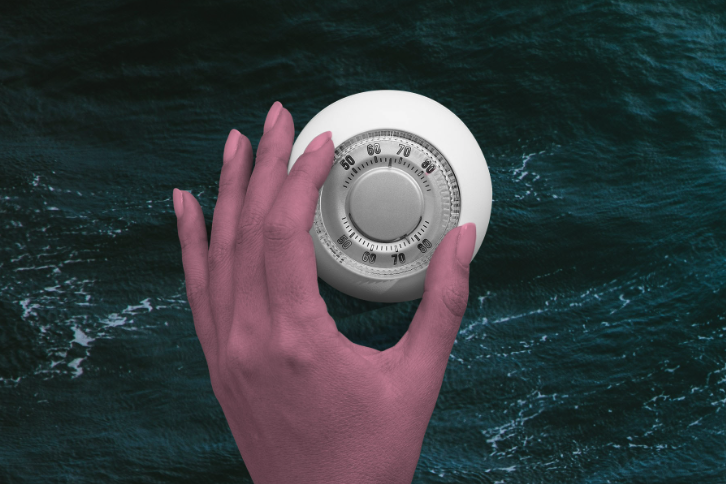
As Temperatures Rise, So Does Pressure to Engineer the Ocean
“The verification step has to be non-profit, and it has to be separate from your money-making scheme,” says Ho, who co-founded [C]Worthy, a nonprofit that makes open-source software to quantify the efficacy and side effects of marine carbon removal. “As ocean biogeochemists, if we have the inclination and we have the skills, then it behooves us to work on it.”

VirtualiZarr: Create virtual Zarr stores using xarray syntax
[C]Worthy staff scientist for data analytics, Tom Nicholas, Ph.D., leads a discussion with Pangeo about VirtualiZarr, his tool developed to overcome some limitations of the “kerchunk” idea in wrangling big datasets like those being used to build software at [C]Worthy.
AltaSea at the Port of Los Angeles | Carbon Management Webinar
AltaSea at the Port of Los Angeles President and CEO Terry Tamminen leads a conversation with [C]Worthy Co-Founder and CTO Alicia Karspeck and others on Ocean Carbon Dioxide Removal.

Alicia Karspeck and AirMiners: How to Build an MRV Ecosystem
MRV is the fulcrum of all things CDR so we're having an event centered on the growing MRV ecosystem and how everyone plays together. How does data flow, what are the needed inputs and outputs of each, where are the challenges, overlaps, and opportunities for optimization of the whole process?
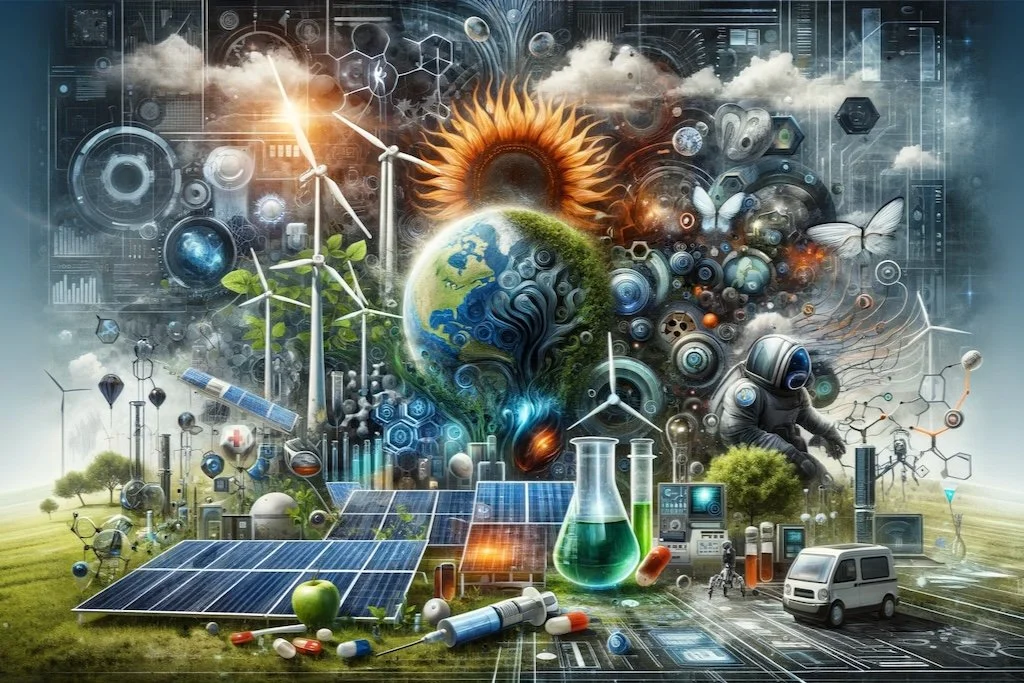
Worth: Tom Kalil’s Renaissance Philanthropy Recruits Wealthy Science Funders
“These projects are also challenging to do in an academic setting because they require a larger group of people than you have in a single academic lab…So, what they proposed was to create non-profit science startups.”
Effectiveness of mCDR: Measurement, reporting, and verification of ocean alkalinity enhancement.
Experts discuss the importance of rigorous MRV, entities potentially responsible for funding and conducting MRV, existing ocean observing infrastructure and modeling capabilities, and implementation readiness.