![[C]Worthy](http://images.squarespace-cdn.com/content/v1/66b3f00a872f892fc1c3299b/02f683d5-3e94-4cc3-90e5-cc909ba570a6/01-CWorthy-Wordmark-Red-RGB.png?format=1500w)
A collection of announcements and media coverage that feature our work: both updates we’ve shared and places our efforts have been highlighted in the broader climate and science community.
News

Time Magazine: The U.S. Energy Department Is Spending $36 Million On Ocean Carbon-Capture Research
"Matt Long, a scientist at the National Center for Atmospheric Research and director of [C]Worthy, a nonprofit aiming to help build tools to measure and verify ocean carbon removal, is working on a project that received about $3.9 million in ARPA-E’s announcement today.”

Carbon Herald: New Research Will Assess Efficiency Of Ocean Alkalinity In Removing CO₂ From The Air
"'This project represents the first time an alkalinity release will be conducted along with the dual tracer technique and allows us the opportunity to determine the movement of CO2 between the ocean and atmosphere and track the evolution of an ocean alkalinity enhancement…”

Salon: Do carbon removal strategies actually work?
‘The problem is, ocean uptake is relatively slow, compared to our rate of emission,' Long told Salon in a phone interview.

Time: The Ocean is the Next Frontier for the Carbon Removal Industry
'The requirements for ramping up carbon removal are so dramatically challenging that it’s really an all hands on deck moment for the scientific community.’
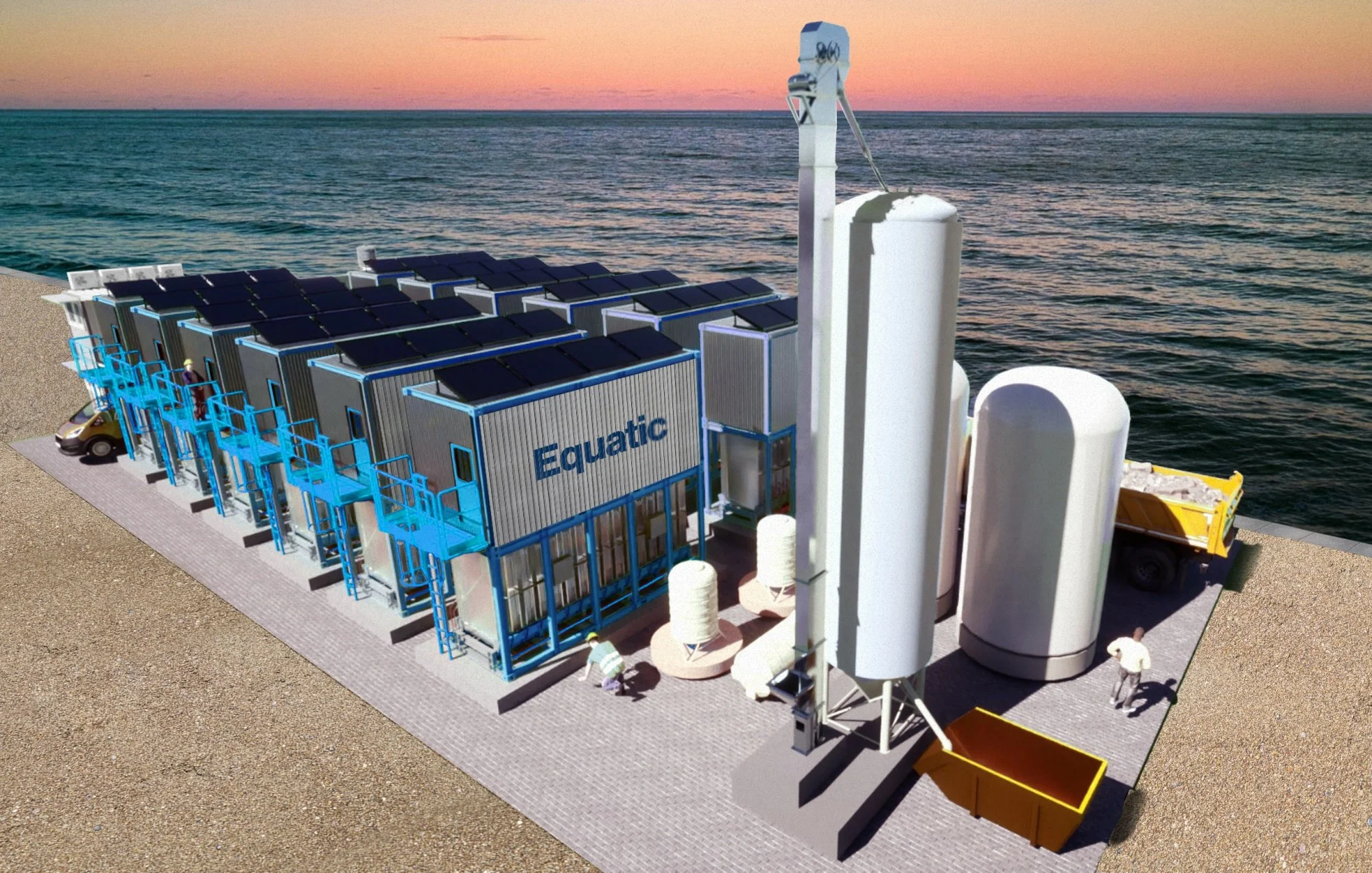
Bloomberg: How Shocking the Ocean Could Turn It Into a Carbon Removal Powerhouse
“University of Hawaii oceanographer David Ho argues that the massive ramp-up in renewable energy needed to power ocean-based CDR on the scale Equatic advocates for would be better deployed to curtail fossil fuel use.”

CTVC: The uncertain-seas of ocean CDR
“Eventually, MRV will be accomplished through tech-heavy geophysical modeling, he told us. But first, those models need to be informed by the observations from early ocean CDR testing, and the companies developing technologies that would enable better measurements need more financial support.”

Bloomberg: Take Care Before Enlisting the Oceans in the Climate Fight
"Getting MRV right is crucial to ensuring that these technologies have a positive climate impact. But it’s one of ocean CDR’s largest knowledge gaps.”

MIT Technology Review: The flawed logic of rushing out extreme climate interventions
“We simply don’t know whether some of these proposed interventions will actually work on large scales, or what negative effects they could have on complex and interconnected ecosystems.”

RFI: Record surface heat could turn oceans into global warming 'time bomb'
"It's the long-term sea surface temperature trend that should alarm us," says climate scientist David Ho.

The New York Times: What’s Worse — Climate Denial or Climate Hypocrisy?
“It doesn’t make sense to use CCS to prolong our use of fossil fuels, especially to produce electricity,” said David Ho, professor at University of Hawaii and senior researcher at Columbia University. “The argument in favor of enhanced oil recovery is often that if they weren’t using this captured CO2, they’d be using some other CO2, but I don’t think you can call anything where you’re getting more oil out of the ground to burn a climate solution.”